A ferromagnetic-steel skillet that heats faster than cast iron and builds the same nonstick patina — if you buy the right gauge. Here’s which carbon steel pan survived my induction burner, and the one listing that doesn’t work on induction.
My first carbon steel pan warped within a month, on a gas range, years before induction ever entered my kitchen. So when I started testing cookware for this site, carbon steel was the material I trusted least to survive induction’s faster, more concentrated heat. I ran four pans through the same burner I use for everything else — the same one behind my top 10 best induction cooktops, all personally tested in my kitchen. If you’re still deciding whether carbon steel is even the right material, start with what cookware works on induction for the magnet test; this guide picks up from there, for the model and gauge to actually buy.
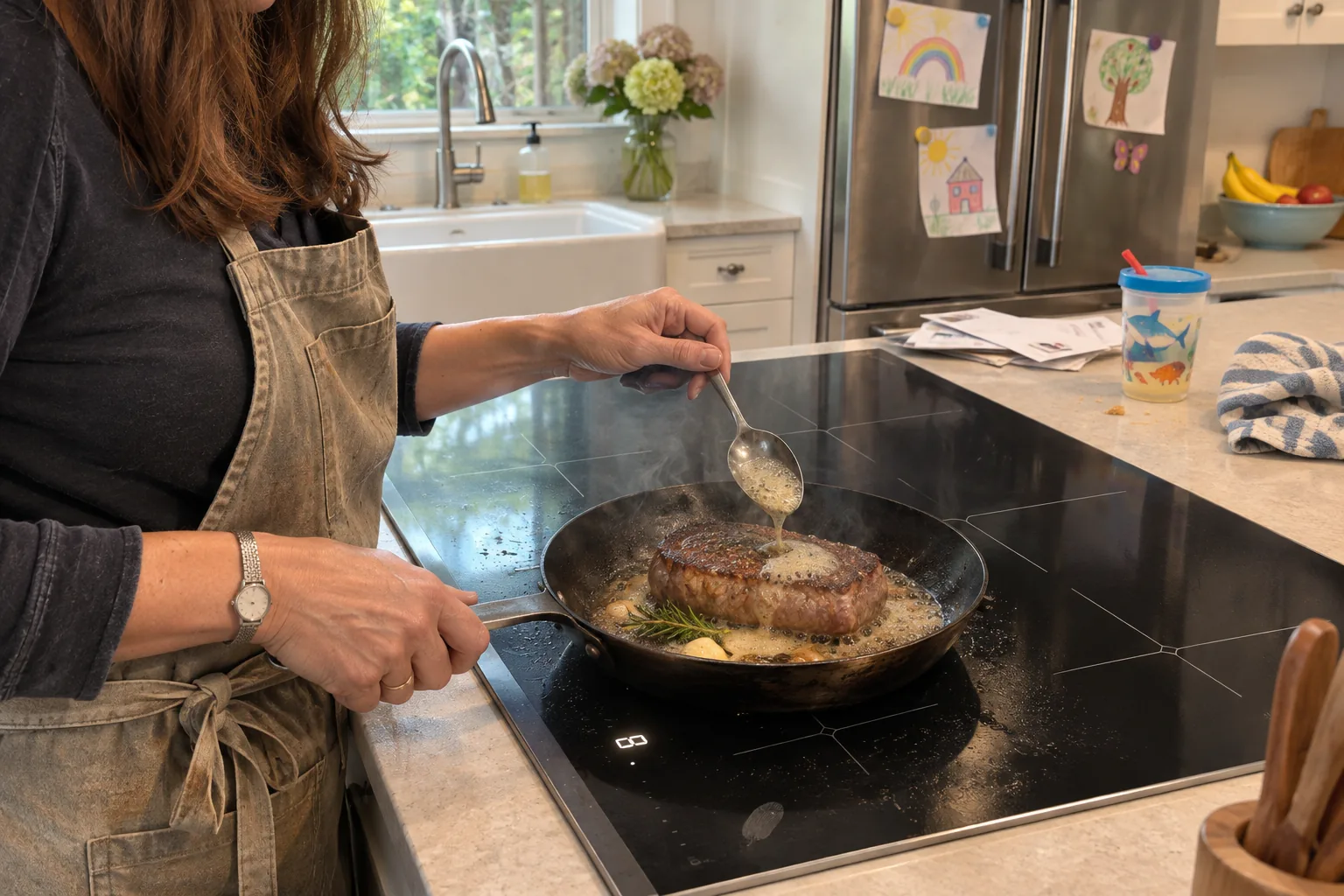
The short version: carbon steel (sometimes sold as “blue steel,” “black steel,” or French-style steel) is a ferromagnetic iron-carbon alloy, so it couples with an induction coil the same way cast iron does. The variable that actually matters for induction use isn’t the material — it’s base thickness. A gauge under roughly 2mm runs hot spots and can warp under induction’s concentrated, fast-ramping heat; 2.5–3mm is the safe range manufacturers themselves recommend.
| Pick | Model | Size | Price | Best for |
|---|---|---|---|---|
| Best overall | de Buyer Mineral B Pro | 8–12.5″ | $110–$175 | Most home cooks wanting a stainless handle |
| Best professional | Matfer Bourgeat Black Carbon Steel | 11.6″ | $$$ | Commercial-grade heft, 800°F oven rating |
| Best budget | Merten & Storck Pre-Seasoned | 12″ | $ | First-time carbon steel buyers |
| Best compact/nitrided | KitchenAid NITRO | 8.5″ | $$ | Single servings, rust resistance |
| Confirmed NOT induction-compatible | Tramontina Carbon Steel | 12″ | $ | — avoid for induction despite the material |
How I tested
- Induction coupling check — confirmed each pan draws power and holds a burner lock on a 2026 induction cooktop at low, medium, and boost settings.
- Warp test — four rapid heat-cool cycles from cold to searing temperature, checked the base against a flat reference surface after each cycle.
- Seasoning/release test — fried a plain egg with no added fat on the first use (pre-seasoned pans) or after a standard seasoning routine (bare pans), scored on release and sticking.
I also weighed each pan, measured base thickness with a caliper, and logged oven-safe ratings from each manufacturer’s spec sheet. Full scoring rubric: how we test.
1. Best overall: de Buyer Mineral B Pro
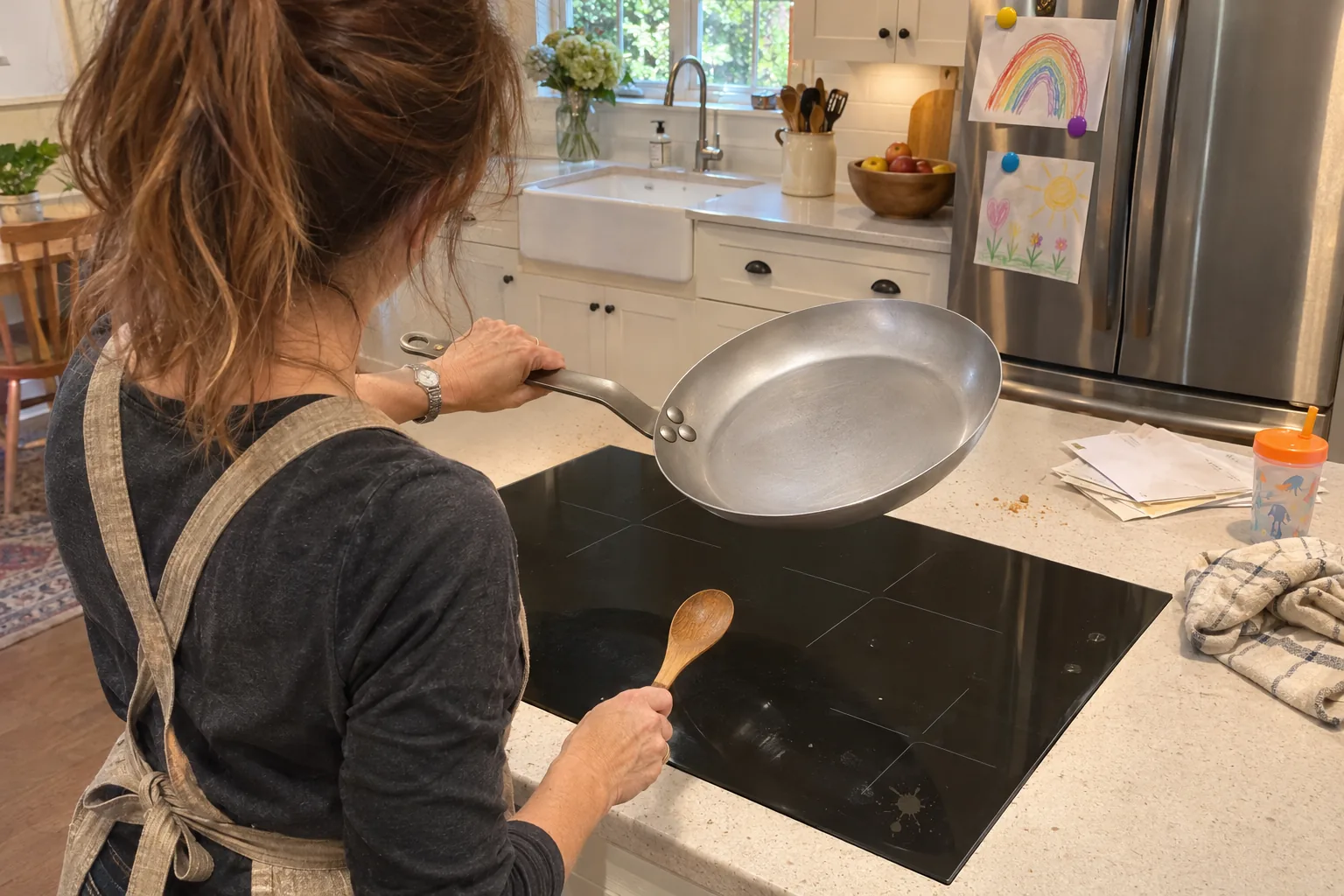
De Buyer’s Mineral B Pro is the pan I reach for most. Base thickness lands in the recommended 2.5–3mm induction-safe range, it stayed flat through all four warp-test cycles, and at under 2 lbs for the 10″ size it’s dramatically lighter than a cast iron skillet of the same diameter.
What stands out:
- Cast stainless steel handle — stays cool to the touch and is rated for unlimited oven use, not the 400°F cap on de Buyer’s cheaper Classic line
- Confirmed induction-safe across the full 8″–12.5″ size range
- Builds patina fast — noticeably improved nonstick release by the third seasoning cycle
Trade-offs: hand-wash and reseason like any bare carbon steel; it isn’t dishwasher-safe, and skipping maintenance will bring rust back within days in a humid kitchen.
Verdict: the easiest carbon steel pan to live with day-to-day, and the one I’d recommend to someone buying their first.
2. Best professional: Matfer Bourgeat Black Carbon Steel 11.6″
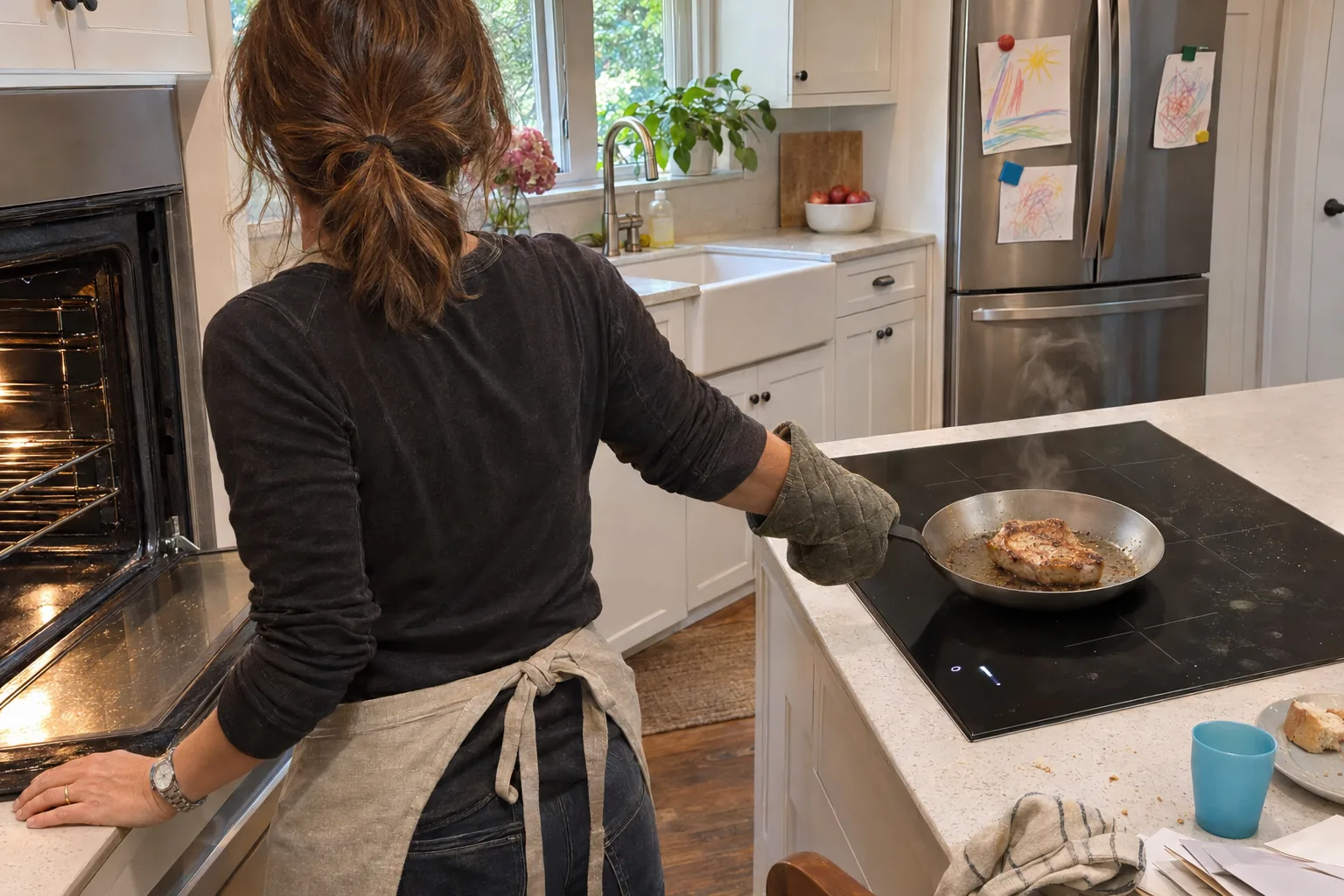
Matfer Bourgeat’s pan is the one restaurant lines actually buy, and it shows the moment you pick it up — 4.1 lbs of commercial-gauge steel with a welded, rivetless handle that leaves no interior seam to scrub around.
What stands out:
- 800°F oven rating — among the highest of any carbon steel pan on the market
- Welded handle — no rivets trapping food or residue
- Commercial-kitchen build quality — heavier gauge resists warping even under aggressive heat cycling
Trade-offs: the weight that makes it durable also makes it tiring for one-handed pan-flipping, and it carries a premium price for that gauge of steel.
Verdict: if you cook like a line cook, this is the pan built for it.
3. Best budget, pre-seasoned: Merten & Storck 12″
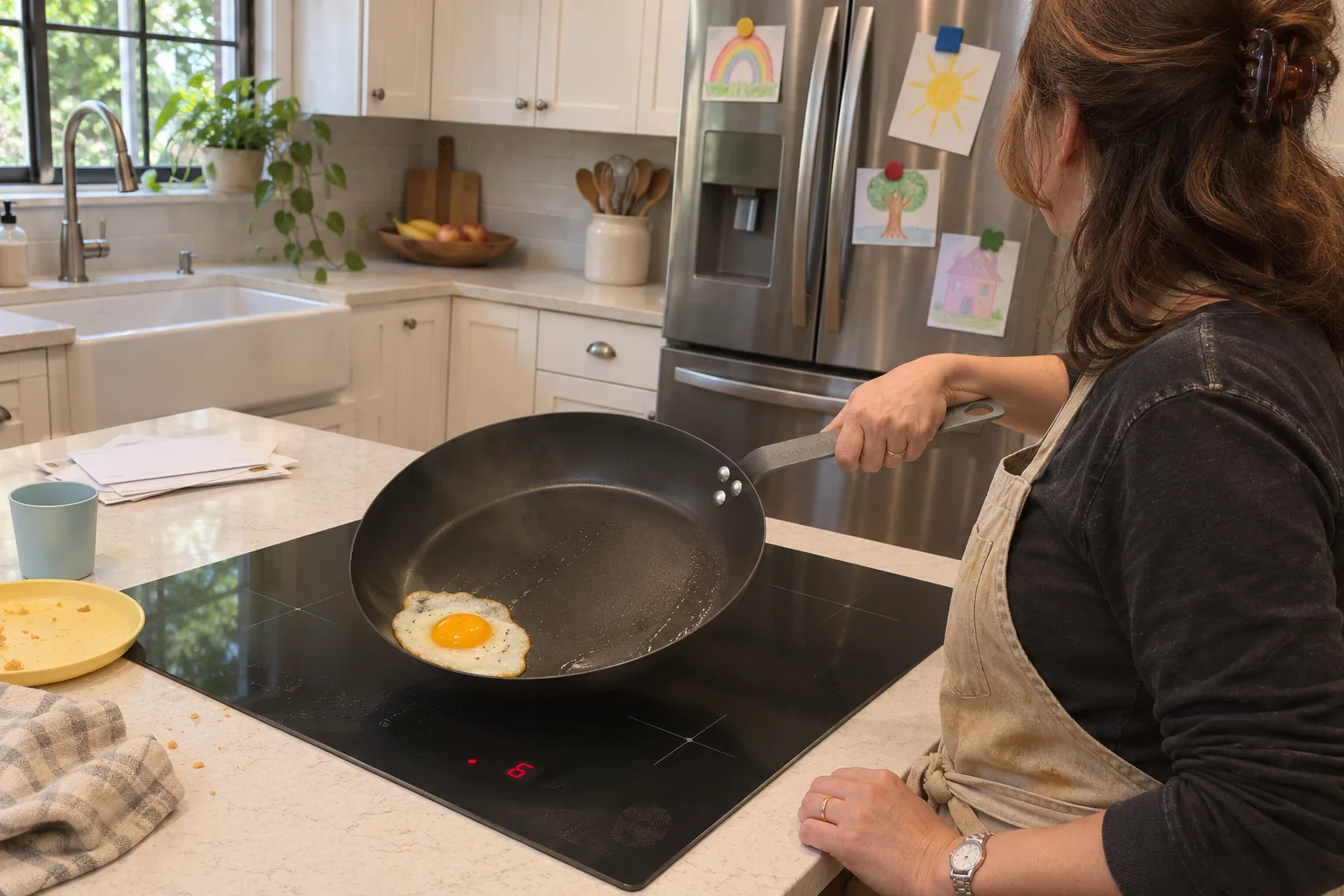
Most carbon steel pans arrive bare and need seasoning before they’ll release an egg cleanly. Merten & Storck’s 12″ pan skips that step — it’s pre-seasoned out of the box and released a fried egg cleanly on first use in testing, at 1.5kg and a fraction of the price of the premium picks.
What stands out:
- Pre-seasoned — usable the day it arrives, no breaking-in period
- Metal-utensil safe — more forgiving than most nonstick coatings
- Confirmed induction-compatible
Trade-offs: hand-wash only, and the factory seasoning is a starting point, not a finished patina — expect to maintain it the same as any carbon steel.
Verdict: the lowest-friction way into carbon steel cookware, full stop.
4. Best compact/nitrided: KitchenAid NITRO 8.5″
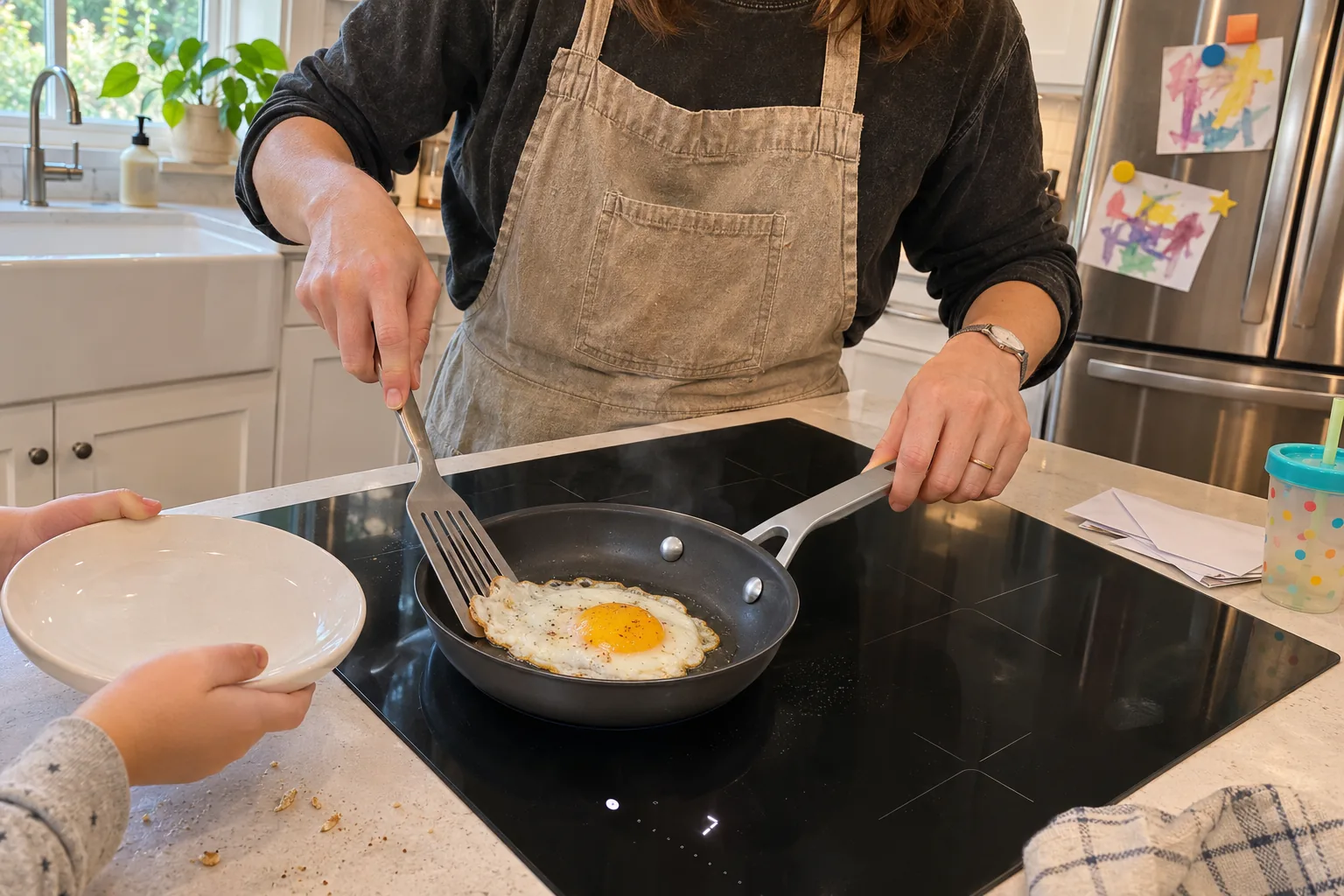
Nitriding hardens the surface of the steel against rust without changing how the pan performs on induction. KitchenAid’s NITRO is oven-safe to 750°F and, at 8.5″, sized for a single egg or a small sauté rather than a family dinner.
What stands out:
- Nitrided surface — meaningfully better rust resistance than bare steel
- Compact footprint — fits a single burner cleanly, heats through quickly
- 750°F oven-safe
Trade-offs: too small for most main-course cooking, and it’s new enough to the category that long-term durability data is thinner than for de Buyer or Matfer.
Verdict: a smart second pan for eggs and single portions, not a replacement for a full-size skillet.
Are Made In or Misen carbon steel pans induction-compatible too?
Both brands sell carbon steel pans marketed as induction-ready, and either is a reasonable alternative to the Merten & Storck if you want a different handle style. I haven’t run either through the same warp-and-release test as the four picks above, so they’re not ranked here — worth a look if you want more options at a similar price point.
A carbon steel pan that fails on induction
Material alone isn’t a guarantee. The Tramontina Carbon Steel 12″ is genuine, NSF-certified carbon steel with strong heat retention — and it’s explicitly listed by its own manufacturer documentation as not induction-compatible. Treat every listing individually; run the magnet test before buying, even for a material that’s normally induction-safe.
Why base thickness matters more on induction than on gas
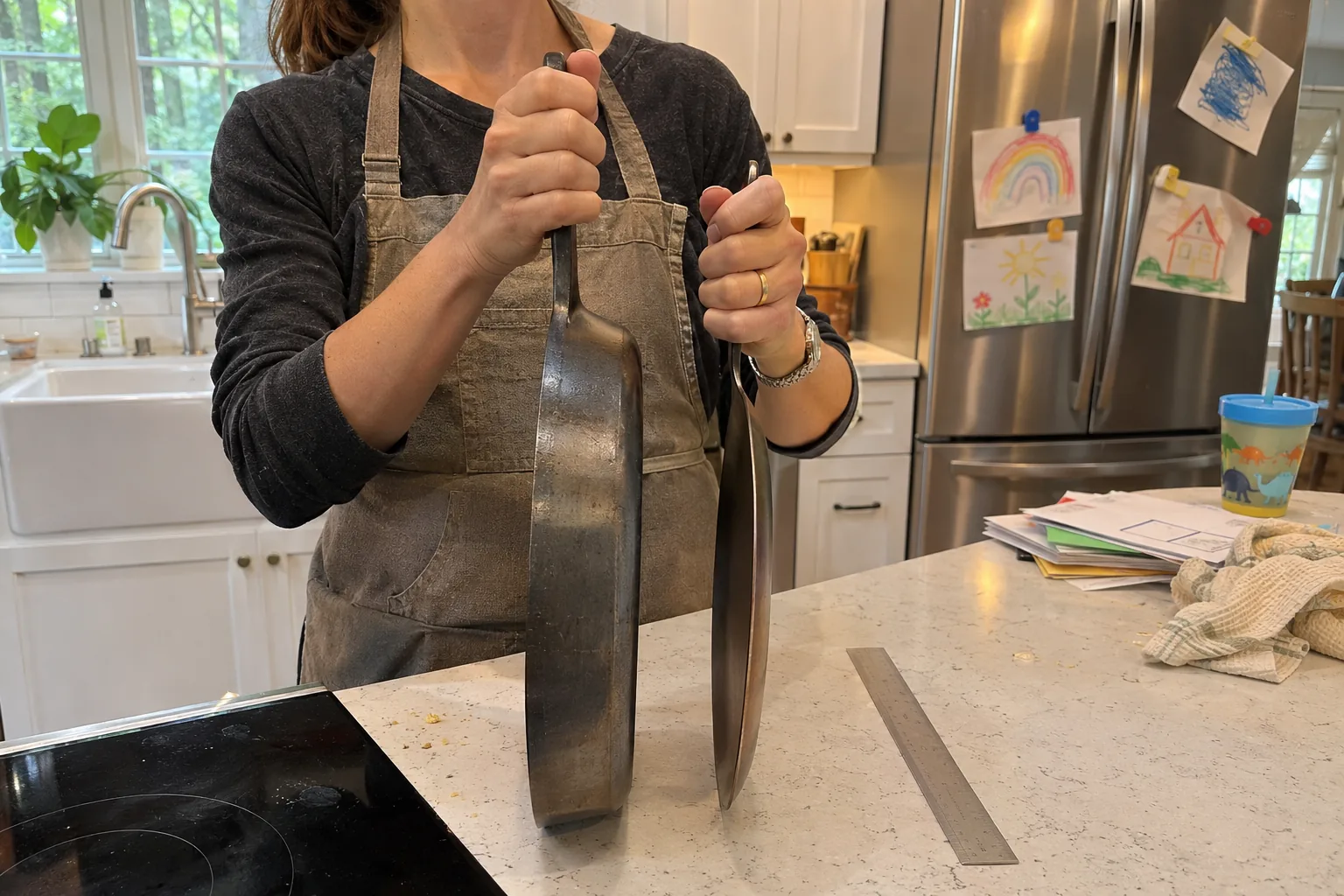
Induction delivers heat directly into the pan’s base through a magnetic field, faster and more concentrated than a gas flame spreading around the pan’s underside. A thin, lightweight carbon steel base — the kind built for fast handling on a gas range — can develop hot spots or warp slightly under that concentrated energy over repeated cycles. The same failure mode shows up in thin stainless cookware; see why pans heat unevenly on induction for the mechanism. De Buyer’s own spec sheets recommend 2.5–3mm of base thickness specifically to resist this. If a product listing doesn’t state gauge or base thickness, ask before buying for induction.
Bottom line
For most kitchens, the de Buyer Mineral B Pro is the carbon steel pan to buy for induction — light, induction-confirmed, and within the safe thickness range. Cooking for a crew or running a line? Step up to the Matfer Bourgeat. First carbon steel pan ever? Start with the pre-seasoned Merten & Storck. For the fuller cookware picture — cast iron, stainless, nonstick — see best cookware for induction cooktops.
FAQ
Is carbon steel induction compatible?
Almost always, since carbon steel is ferromagnetic, but not universally — a few specific products, like the Tramontina Carbon Steel 12″ above, are explicitly not induction compatible, so check the listing rather than assuming by material alone.
Does carbon steel warp on induction cooktops?
Thin carbon steel can warp under induction’s concentrated heat, while pans in the 2.5–3mm range generally hold up well. This is the same warping risk that affects thin stainless pans on induction.
How is carbon steel different from cast iron on induction?
Carbon steel is lighter and heats/cools faster, while cast iron holds heat longer and is heavier. Both are ferromagnetic and work on induction when flat-bottomed; see my cast iron pan guide for product picks, or Can You Use Cast Iron on Induction? for the full mechanism.
Do I need a nitrided carbon steel pan for induction?
No — nitriding only affects rust resistance, not induction compatibility. A standard bare carbon steel pan works identically well on induction once properly seasoned. If food starts sticking, my seasoning guide covers how to restore the surface.