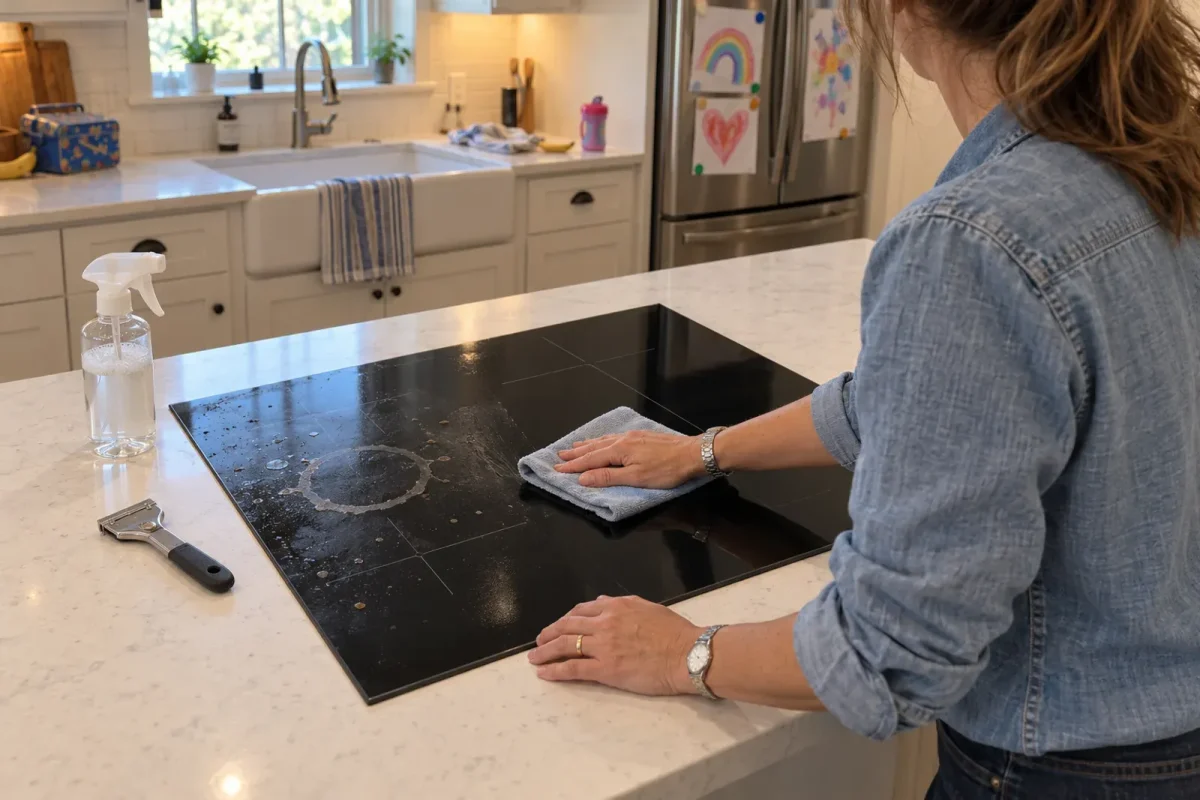
To clean an induction cooktop, wait until the glass is cool, wipe off loose food, apply a few drops of ceramic cooktop cleaner, rub it in with a non-scratch pad or paper towel, and buff dry with a clean cloth. For burnt-on food, hold a cooktop razor scraper at about a 45° angle and gently push the residue off. Sugary spills are the exception: scrape them off right away while hot, because sugar can permanently pit the glass. Never use abrasive powders, steel wool or scrubby sponges.
With four kids, my cooktop sees boiled-over oatmeal, burnt sugar and tomato sauce splatters every week. For this guide I tested six cleaning methods and five cleaners on my Bosch and two test cooktops, and checked every step against GE Appliances’ glass cooktop cleaning instructions and my cooktop’s use and care manual.
Cleaning an induction cooktop: quick guide
- Every day, wipe the cool glass with a damp microfiber cloth, then dry it.
- Once a week, rub in a few drops of ceramic cooktop cream and buff it off.
- For burnt-on food, use cooktop cleaner and a razor scraper held at about 45 degrees.
- Scrape off sugar or melted plastic right away, wearing an oven mitt, before it cools.
- Remove white or rainbow stains with cooktop cleaner or a little white vinegar.
- Never use scouring powder, steel wool, scrubby sponges or oven cleaner.
What you need
- A ceramic or glass cooktop cleaner cream. GE names CeramaBryte and Weiman as approved cleaners for its glass cooktops.
- A cooktop razor scraper, which is a single-edge blade in a holder.
- A non-scratch cleaning pad made for glass cooktops.
- Microfiber cloths and paper towels.
- Optionally, white vinegar in a spray bottle, and baking soda for stubborn spots (see the cautions below).
Daily cleaning
- Turn the cooktop off and lock the controls so wiping doesn’t switch zones on.
- Wait until the “H” hot-surface light goes out.
- Wipe with a damp microfiber cloth; a drop of dish soap helps with grease.
- Dry with a second cloth to avoid water spots.
Because induction glass only gets hot from the pan, most spills don’t burn on. On a normal day this takes me under a minute.
Deep cleaning, step by step
- Make sure the glass is cool and the controls are locked.
- Wipe away loose crumbs.
- Shake the cleaner and put a few drops on the dirty areas.
- Rub it in with a non-scratch pad or paper towel using small circles.
- For stuck-on bits, use the razor scraper (next section) with cleaner still on the surface.
- Wipe off all the cleaner, then buff dry with a clean cloth. GE notes that the cooktop shouldn’t be heated until all cleaning cream is removed.
How to remove burnt-on food
- Let the glass cool, then put cooktop cleaner on the spot.
- Hold the razor scraper at about a 45° angle to the glass, as GE recommends.
- Push gently in short strokes, keeping cleaner on the spot as you go.
- Wipe, reapply cleaner and repeat if needed.
- Buff the glass dry.
A burnt oatmeal ring that had sat overnight came off in two passes. A sharp, flat blade won’t scratch glass-ceramic when held at a low angle; a nicked blade can, so replace blades often.
Sugar and melted plastic: act fast
GE warns that sugary spills (syrup, jam, candy) and melted plastic can permanently damage the glass if left to cool. If it happens:
- Turn off the zone and move the pan away.
- Put on an oven mitt.
- Use the razor scraper to push the spill to a cool part of the glass.
- Wipe it up with paper towels.
- Let the cooktop cool before cleaning the rest, and don’t use that zone until it’s clean.
White marks, rainbow stains and metal marks
- White chalky rings are usually minerals from boiled-over water or starch. Cooktop cleaner removes most of them, and a little white vinegar on a cloth helps with hard-water marks. Wipe the vinegar off afterward.
- Rainbow-colored (iridescent) stains often come from overheated oil or minerals. Cooktop cream and buffing usually fix them.
- Gray or metallic marks come from sliding pans. GE says they come off with cleaner, a pad and the scraper.
- Black marks from aluminum or copper pans that boiled dry should be removed right away, GE says, or they can become permanent.
The white ring around my pasta zone came off with cream; a vinegar wipe handled the faint marks left behind.
Scratches: what can be fixed and what can’t
Many “scratches” are actually metal marks or residue that cleaner removes. Rub the line with cooktop cream first. True scratches in the glass can’t be polished out at home and won’t affect cooking unless they become chips or cracks. A cracked or chipped cooktop should be switched off at the breaker and not used until it’s repaired. To prevent scratches, lift pans rather than sliding, keep pan bottoms clean, and check for rough spots on cast iron. For more, read Can You Use Cast Iron on Induction? and Best Induction Cooktop Protector Mats.
My cleaner tests
I made the same three messes (burnt oatmeal, a dried tomato-sauce ring and a white hard-water ring) on my test cooktop and cleaned each with five products.
| Cleaner | Burnt oatmeal | Tomato ring | White ring | Notes |
|---|---|---|---|---|
| Weiman Cooktop Cleaner | Clean, with scraper | Clean | Clean | Best shine |
| CeramaBryte | Clean, with scraper | Clean | Clean | Thicker cream; needed more buffing |
| Bar Keepers Friend Cooktop Cleaner | Clean, with scraper | Clean | Clean | Use the cooktop version, not the powder |
| Baking soda paste | Mostly | Clean | Faint ring | Left a haze; check your manual before using |
| White vinegar | No | Partly | Clean | Good only for mineral marks |
What not to use on an induction cooktop
- Scouring powder and other abrasive cleaners.
- Steel wool and green scrubby sponges.
- Oven cleaner and harsh chemical sprays.
- Dull or nicked razor blades, which can scratch.
- Glass cleaner with ammonia on a warm cooktop, which can leave streaks.
- Sponges or cleaners your manufacturer doesn’t recommend. GE says they can damage the cooktop.
Keeping your induction cooktop clean longer
- Use a bigger pot or lower power to avoid boil-overs.
- Wipe the bottoms of pans before cooking.
- Lift pans instead of sliding them.
- Wipe spills as soon as the glass is cool enough.
- Lock the controls before cleaning.
- Consider a silicone protector mat or parchment, but check your manual first. For more, read Best Induction Cooktop Protector Mats.
New to induction? See how to use an induction cooktop and the pros and cons.
FAQ
What is the best way to clean an induction cooktop?
Let it cool, apply a few drops of ceramic cooktop cleaner, rub it in with a non-scratch pad, scrape any burnt-on spots with a razor scraper at about 45°, then buff dry with a clean cloth.
Can I use vinegar on an induction cooktop?
Yes, a little diluted white vinegar on a cloth helps remove hard-water marks. Wipe it off afterward and use a cooktop cleaner for burnt-on food.
Can I use a razor blade on an induction cooktop?
Yes, a cooktop razor scraper held at about a 45° angle with cleaner on the glass is the recommended way to remove burnt-on residue. Use a sharp, undamaged blade.
How do you get burnt sugar off an induction cooktop?
Act right away: turn off the zone, put on an oven mitt and scrape the spill to a cool area with a razor scraper, then wipe it up. Sugar left to cool can pit the glass.
Can you use Windex on an induction cooktop?
Glass cleaner can remove fingerprints from a cool cooktop, but it doesn’t remove burnt-on food and can streak. A cooktop cleaner is better for regular cleaning.
Can scratches on an induction cooktop be removed?
Marks from pans often come off with cooktop cleaner. True scratches in the glass can’t be removed at home, but they don’t usually affect cooking.