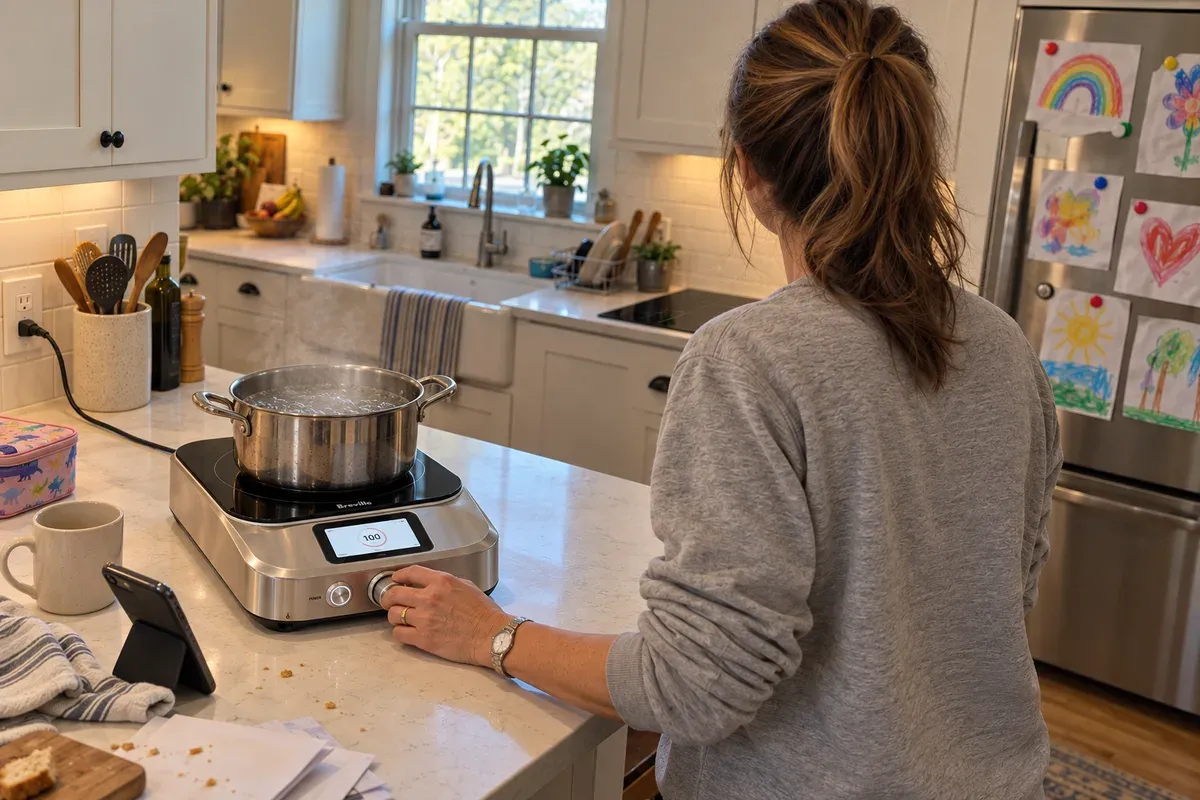
The Breville Control Freak is the induction burner I get asked about most, usually in a message that ends with “Is it really worth $1,500?” I’d wondered the same thing for years, so while I was testing precision burners for this site, I cooked with a Control Freak Home in my own kitchen for 30 days.
I made caramel, fried chicken, tempered chocolate and soft-boiled eggs, and I held frying oil at 350°F for an hour while a probe thermometer logged the real temperature. I didn’t cook on the original commercial Control Freak, so I compare it here using Breville’s published specs.
For home cooks who need exact temperatures, the Control Freak Home is the one to buy, and restaurants should choose the original. Both set the pan temperature in 1-degree steps from 77°F to 482°F and come with a probe. In my kitchen the Home held frying oil within about 3 degrees for an hour. If you want very good rather than perfect control, a NuWave probe burner costs a fraction of the price.
Comparing other temperature-controlled burners? See my precision induction picks. For everyday cooking, my portable induction picks cost far less. If you’re deciding between the two Brevilles, keep reading.
Control Freak vs Control Freak Home at a glance
- Buy the Control Freak Home if: you cook at home and want exact temperatures for frying, candy, chocolate, sauces and sous vide-style cooking.
- Buy the original Control Freak if: you run a professional kitchen and need the NSF listing, sturdier housing, Universal Serial Bus (USB) recipe programs and 72-hour timer.
- Buy a NuWave probe model instead if: you want probe control for a fraction of the price and can live with less precision. I compare them in my guide to the best precision induction cooktops.
Control Freak vs Control Freak Home: side-by-side specs
| Control Freak (original) | Control Freak Home | |
|---|---|---|
| Power | 1,800 watts, 120 volts | 1,800 watts, 120 volts |
| Temperature range | 77–482°F (25–250°C) | 77–482°F (25–250°C) |
| Steps | 1°F (405 settings) | 1°F (405 settings) |
| Sensing | Dual sensors under the glass + probe | Dual sensors under the glass + probe |
| Heating element / pan size | 10-inch element; pans 4.5–10 inches | 10-inch element; pans 4.5–10 inches |
| Controls | Push buttons, full-color display | Touchscreen with 4 modes and a control knob |
| Housing | 0.8 millimeters stainless steel | 0.4 millimeters stainless steel |
| Size | 13.7 × 18.5 × 4.3 inches; about 16.2 pounds | 12.2 × 16.9 × 4.1 inches; about 15.4 pounds |
| USB recipe programs | Yes | No |
| Timer | 72 hours with repeat, continue, keep warm and stop | Multi-function timer |
| Listings | UL/IEC and NSF commercial; IPX3 water protection | UL household |
| Warranty | 2-year limited commercial | 2-year limited consumer |
| Price | About $1,500 | $1,499.95 list (Breville, October 2026) |
What makes the Control Freak different from other induction burners
Most induction burners control power: you pick a level and the burner pushes that much energy into the pan. The Control Freak controls temperature. Sensors under the glass read the pan many times a second, and the probe can read the food or liquid itself, so the burner adjusts power to hold the exact number you set. That’s why it can keep oil at 350°F when you drop in cold chicken, or hold chocolate at tempering temperature without a double boiler.
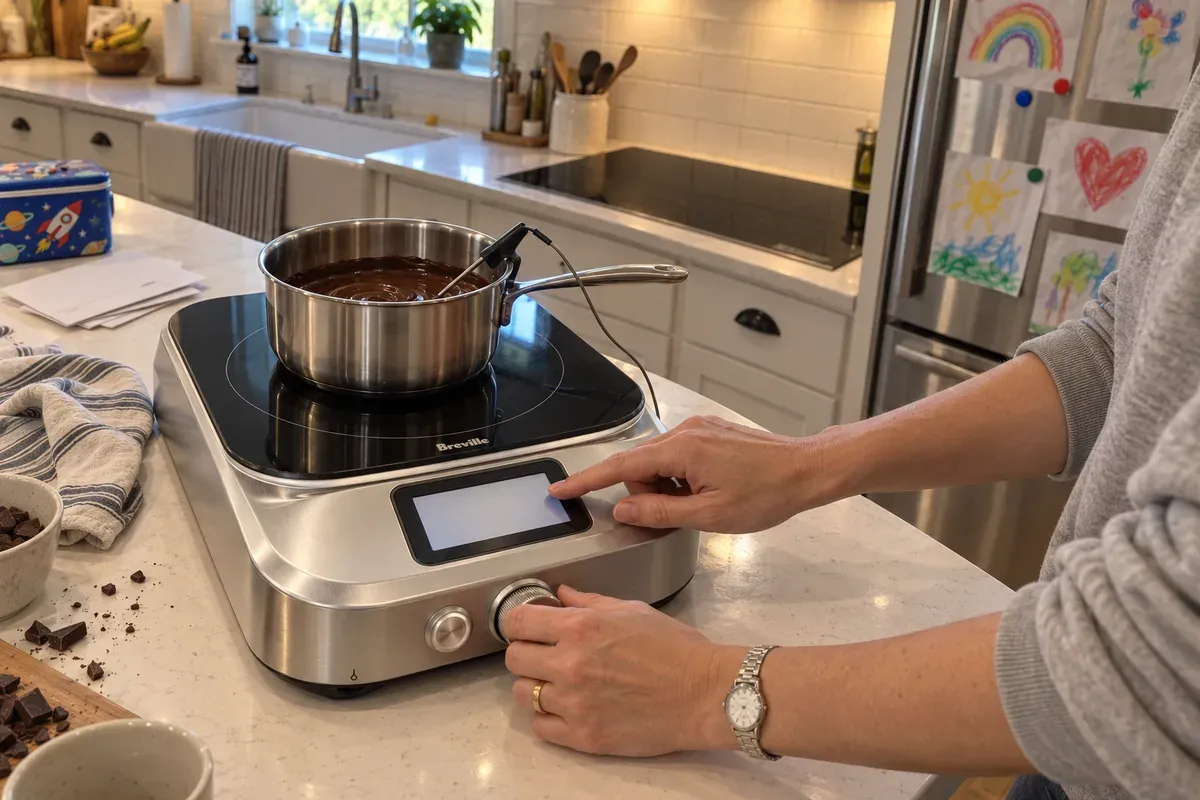
Breville developed the original with PolyScience, its commercial culinary brand, for professional kitchens. The Home version takes the same temperature system and puts it in a smaller, quieter, cheaper body for home kitchens, according to Breville.
Control Freak Home: my experience
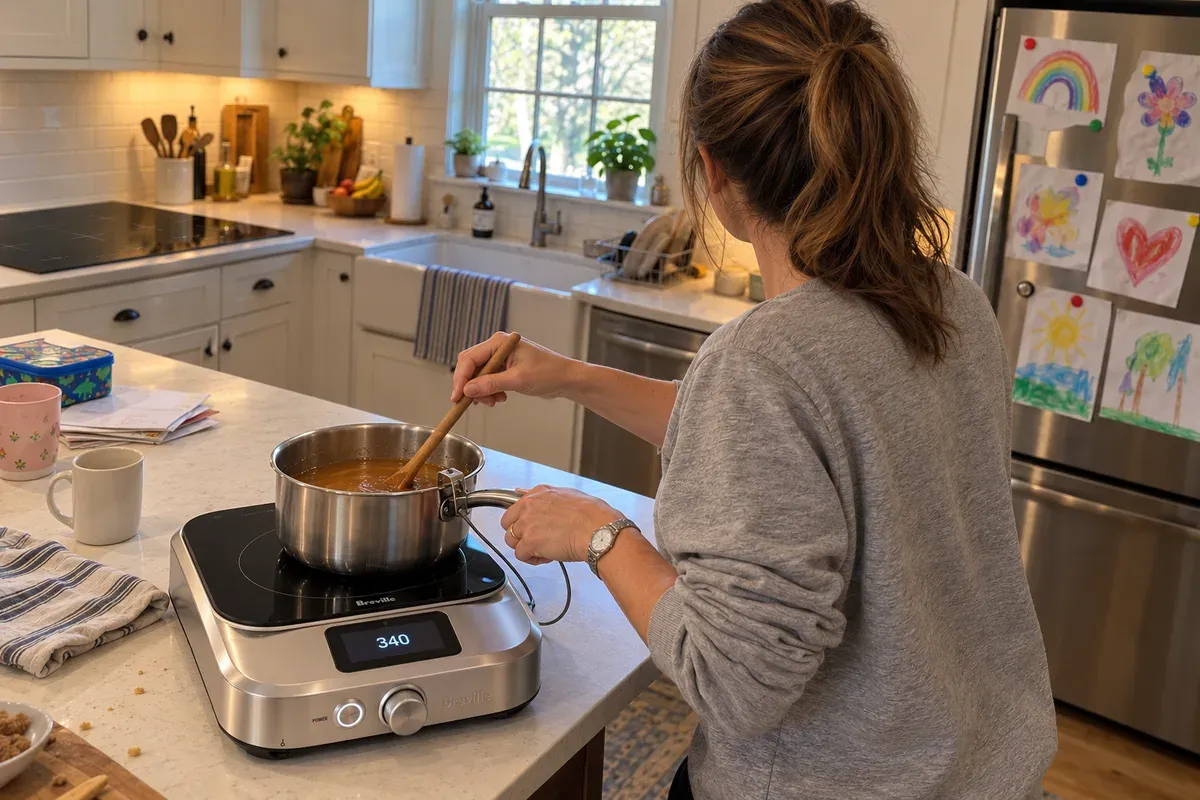
My results: Oil at 350°F held about 3°F up or down over an hour; water at 140°F held about 1°F up or down with the probe; 1 quart boiled in 4 minutes and 40 seconds.
The first thing I made was caramel, the recipe I burn most often. I set 340°F, stirred twice, and it came out an even amber. Fried chicken was the real test: the oil dropped only a few degrees when I added the chicken and recovered in under a minute.
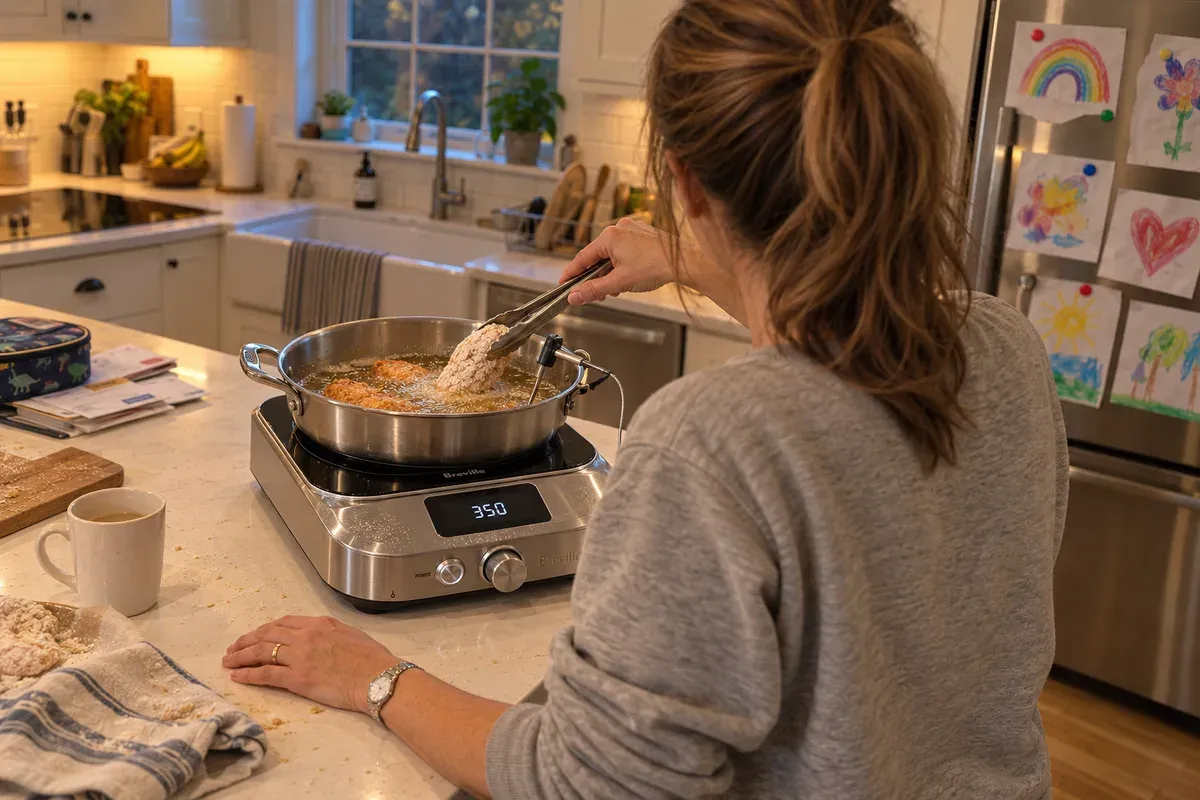
- Modes: manual, ingredient-based temperatures, technique guides and custom presets on the touchscreen.
- Probe: can hold a target food temperature or act as a thermometer, per Breville.
- Everyday cooking: for plain boiling it’s no faster than a $100 burner; you’re paying for control, not speed.
- What I didn’t love: it’s big for one burner, the fan runs after cooking, and the 10-inch pan limit rules out my biggest skillet.
Tom’s Guide also tested it for two weeks and came away wanting to replace its gas range.
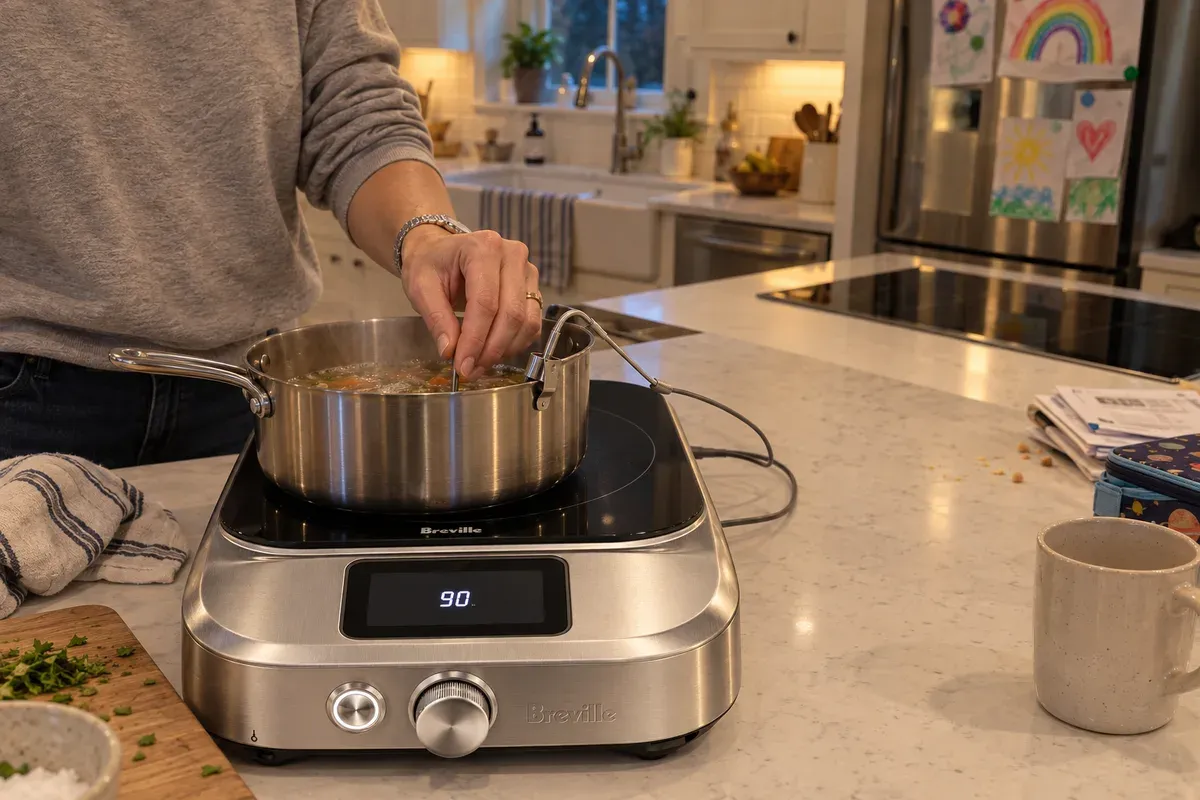
The original Control Freak (commercial)
I haven’t tested the original. Based on the specs above, it’s the same temperature engine in a tougher, thicker steel body with push buttons, a USB port for loading recipe programs, a 72-hour timer, a carrying case and commercial listings, including NSF, that restaurants and health inspectors look for. Its warranty is written for commercial use. If you’re cooking for paying customers, that’s the one.
Is the Breville Control Freak worth $1,500?
- Worth it if: you fry, make candy, temper chocolate or cook delicate sauces often, or you want restaurant-level control at home.
- Not worth it if: you mostly boil, sauté and simmer. A good $100–$200 burner does those jobs well.
- Middle ground: a NuWave probe burner gives you probe-controlled liquids for far less, though with wider temperature swings in my tests.
Cheaper alternatives to the Control Freak
| Alternative | Why consider it | Trade-off |
|---|---|---|
| NuWave Diamond with probe | Probe control, 100–500°F, 1,400 watts | 5°F steps; wider swing in oil |
| NuWave upgraded with probe | Probe plus 1,800 watts, 50–575°F | Loud fan |
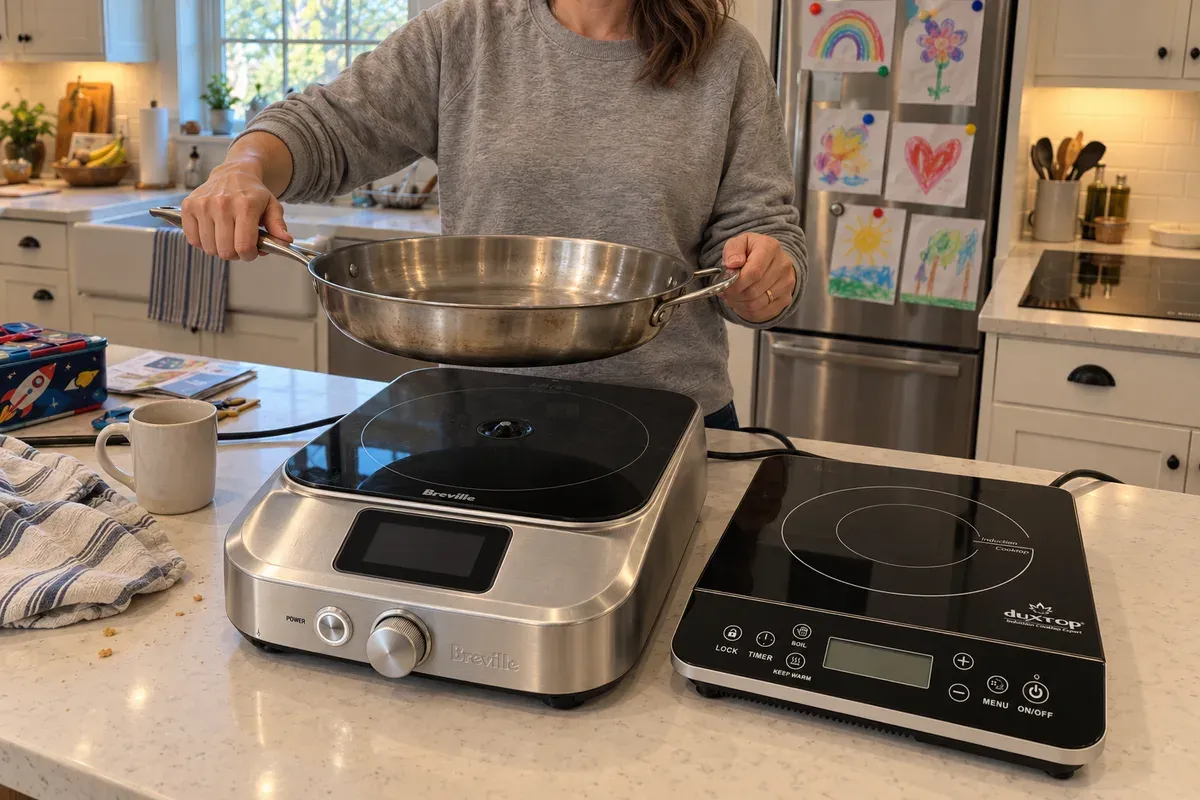
| Duxtop 9600LS | Best everyday burner, 20 temperature levels | No probe |
For more options, read my comparison of NuWave induction cooktops.
Warranty and cookware
Both models come with a 2-year warranty from Breville. Neither was sold new on Amazon when I checked on October 22, 2026, so buy from Breville or an authorized kitchen retailer to make sure the warranty applies.
Your pans must be magnetic and between 4.5 and 10 inches across. If you’re not sure about yours, see my guide to what cookware works on induction.
FAQ
What is the difference between the Breville Control Freak and Control Freak Home?
Both use the same 1°F temperature control from 77 to 482°F with a probe. The original is built and listed for commercial kitchens with a thicker housing, USB recipe programs and a 72-hour timer; the Home version is smaller, quieter and has a touchscreen.
How much does the Breville Control Freak cost?
The Control Freak Home listed at $1,499.95 on Breville’s site in October 2026. The original commercial model is about $1,500.
Is the Breville Control Freak worth it?
It’s worth it for cooks who often need exact temperatures, such as for frying, candy or chocolate. For everyday boiling and sautéing, a much cheaper induction burner works just as well.
What temperature range does the Control Freak have?
Both models go from 77°F to 482°F (25–250°C) in 1-degree steps.
Does the Control Freak Home have a probe?
Yes. It comes with a precision temperature probe that can hold a target temperature or work as a thermometer.
What pans work on the Breville Control Freak?
Magnetic, induction-compatible pans between about 4.5 and 10 inches across.